May 8, 2026
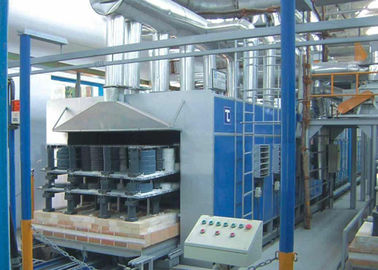
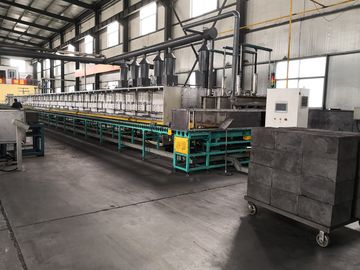
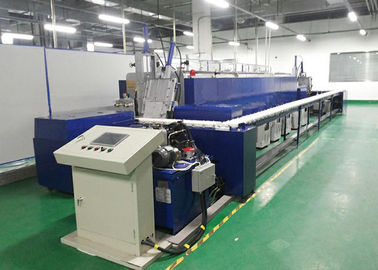
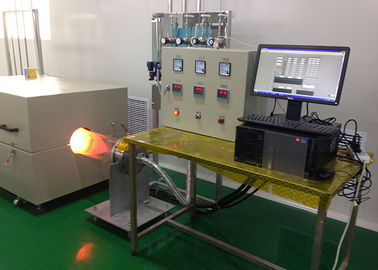
For industrial glass manufacturers requiring precise thermal control and superior accessibility, the Bottom Lifting Annealing 1000℃ Industrial Glass Furnace represents a paradigm shift in post-forming heat treatment. Unlike traditional top-loading or front-loading batch ovens, this advanced system utilizes a hydraulically or mechanically actuated movable hearth to deliver unparalleled ergonomics and uniform thermal distribution.
While standard soda-lime glass anneals near 550°C, technical glasses—including borosilicate, aluminosilicate, and fused silica—require significantly higher temperatures to relieve internal strain. The benchmark of 1000°C is critical for:
High-Strain Relief: Ensuring stress relaxation in thick-walled scientific glass or glass-ceramics.
Controlled Cooling Ramp: Preventing devitrification in high-performance compositions.
Material Compatibility: Processing glass bonded to metal or ceramic substrates for electronics.
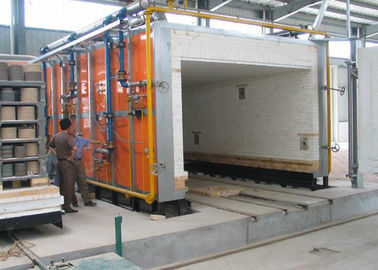
The defining innovation is the bottom lifting hearth. The furnace chamber itself remains static, while a multi-layered ceramic fiber or firebrick platen rises from beneath to seal the workspace. This design offers three quantifiable advantages:
Crane & Forklift Loading: Heavy glass components (e.g., industrial sight glasses, pipeline fittings) can be positioned on the hearth while fully exposed, eliminating the risk of impact damage against a hot face.
Uniform Thermal Profile: Because the heating elements are positioned both above and on three walls of the stationary chamber, the lifting bottom creates a near-isothermal workspace. Temperature uniformity of ±5°C at 1000°C is achievable with SiC rod elements.
Rapid Quench Capability: After the annealing soak, the bottom can be partially lowered to introduce ambient air, providing controlled cooling without thermal shock.
A true 1000°C industrial glass furnace must employ:
Heating Elements: Molybdenum disilicide (MoSi2) or silicon carbide (SiC) globars. NiCr alloys degrade rapidly above 950°C.
Insulation: Vacuum-formed ceramic fiber modules backed by low-thermal-mass calcium silicate board to reduce heat soak.
Thermocouples: Type S (Platinum/Platinum-10% Rhodium) for accurate sensing in the oxidizing environment common to glass processing.
When sourcing, ask for these performance guarantees:
Maximum operating temperature: 1050°C (with 1000°C continuous rating).
Lifting stroke: 300-600mm for safe load placement.
Ramp rate: Programmable up to 15°C/min for heating; 5°C/min to 0.5°C/min for annealing.
Work zone dimensions: Customizable from 500x500mm to 3000x2000mm.
By integrating a bottom-lifting hearth with a 1000°C thermal capability, industrial glass processors can reduce breakage rates by up to 40% and increase throughput for high-value technical glass components. Ensure your supplier provides full factory acceptance testing (FAT) with thermal mapping at the target annealing setpoint.